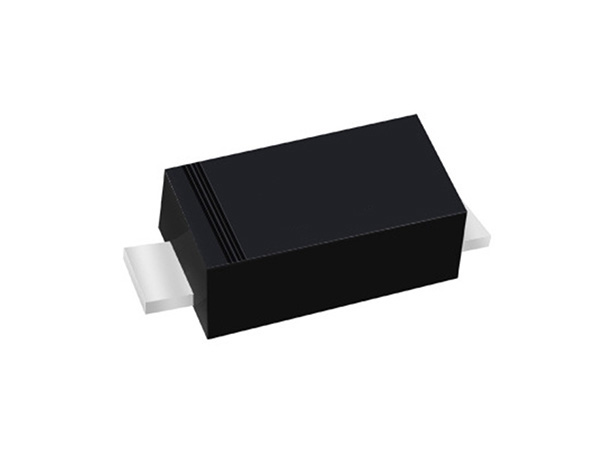
The working principle of ESD (electrostatic discharge) protector is mainly based on its ability to quickly change from a high resistance state to a low resistance state when an abnormal overvoltage occurs in the circuit, thereby discharging the instantaneous overcurrent caused by the abnormal overvoltage to ground and clamping the abnormal overvoltage within a safe level to protect the subsequent circuit from damage. The following is a detailed explanation of its working principle:
1、 Normal state
When the circuit is working normally, the ESD protector is in a cut-off state (high resistance state), which has no effect on the normal operation of the circuit. The leakage current is very small, a few microamperes or even lower. In this state, the ESD protector acts as an open circuit and does not interfere with the normal signal transmission of the circuit
2、 Abnormal overvoltage state
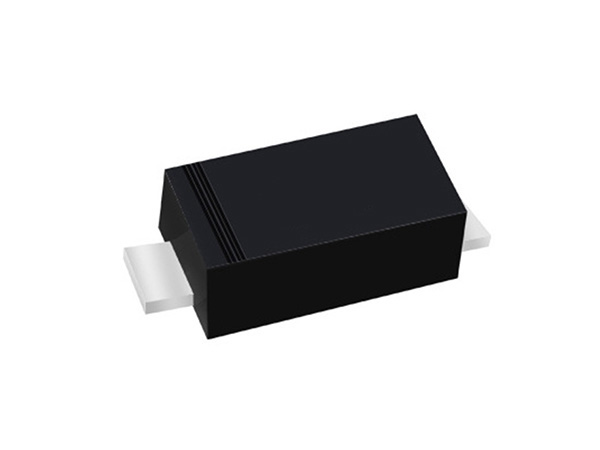
When an abnormal overvoltage occurs in the circuit and reaches the breakdown voltage (VBR) of the ESD protector, the device will quickly transition from a high resistance state to a low resistance state. This transformation enables the device to provide a low impedance conduction path for instantaneous overcurrent, thereby diverting the current to ground. During this process, the ESD protector acts as a short circuit, quickly directing the current generated by overvoltage into the ground to prevent damage to the circuit
3、 Voltage clamp
At the same time as the device is conducting, it will also clamp the abnormal overvoltage within a safe level, namely the clamp voltage (VC). This voltage level is usually lower than the maximum peak voltage that the protected circuit can withstand, ensuring that the circuit is not damaged. Voltage clamping is a key mechanism for ESD protectors to protect circuits from overvoltage damage
4、 Key performance parameters
Reverse Cut Off Voltage (VRMM): The voltage (effective value) that allows for long-term continuous application across the ends of an ESD protector. In this working state, the ESD device does not conduct and remains in a high impedance state
Breakdown voltage (VBR): The voltage at which the ESD protector begins to operate (conduct). This is the threshold voltage at which the device transitions from a high resistance state to a low resistance state
Clamp voltage (VC): The voltage present at both ends of an ESD protector when a peak current flows through it. Exceeding this voltage may cause permanent ESD damage
Reverse leakage current (IR): The current flowing through an ESD protector at a specified DC voltage (generally not exceeding the maximum operating voltage). The smaller the current, the less impact it has on the protection circuit
Peak Pulse Current (IPP): It reflects the amount of current that an ESD protector can discharge when subjected to transient overvoltage
Junction capacitance (Cj): The junction capacitance of a PN junction, which affects the signal transmission of the protection circuit. The smaller the value measured under given voltage and frequency conditions, the less impact it has on the signal transmission of the protection circuit
5、 Application and Selection
ESD protectors are widely used in various electronic devices, such as computers, communication equipment, industrial control equipment, medical equipment, automotive electronics, etc. When selecting a suitable ESD protector, factors such as the operating voltage, signal type, signal rate, and required maximum parasitic capacitance of the protected circuit should be considered. At the same time, it should be ensured that the ESD protector can withstand the expected ESD impact without damage, while also maintaining the stability of its electrical performance
In summary, ESD protectors play an important role in circuit protection through their unique working principles and key performance parameters. When selecting and applying, the actual needs of the circuit and the characteristics of the devices should be fully considered to ensure the safety and stability of the circuit
Jiangsu Daqi Semiconductor Technology Co., Ltd. © Copyright 2025
【Backstage】