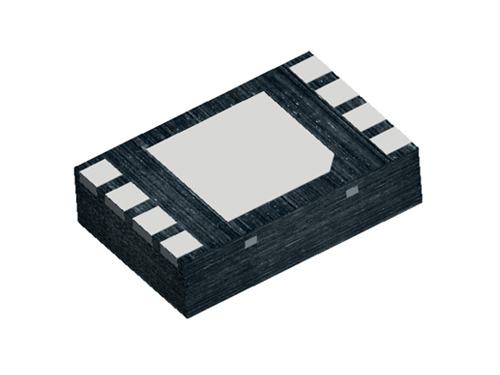
The formal name of ESD diode is ESD Protection Diode (Electrostatic Discharge Protection Diode). It is an over‑voltage protection component specially designed to safeguard electronic circuits against electrostatic‑discharge damage. It differs essentially from ordinary diodes: ordinary diodes perform functional tasks such as rectification and switching, while ESD diodes undertake protective functions.
In terms of working principle, ESD diodes are connected in parallel within circuits. Under normal operating conditions, they stay in high‑impedance cut‑off state with nanoampere‑level leakage current, barely interfering with circuit performance. When electrostatic pulses (with voltage up to several kilovolts or even tens of kilovolts) intrude, they conduct within picoseconds, shunting high‑voltage current to ground and clamping voltage to a safe level, so as to protect sensitive rear‑end IC chips from breakdown.
Many customers raise the question whether ESD diodes and TVS diodes are identical. Strictly speaking, ESD diode is a sub‑category of TVS diode, optimized specifically for ESD protection. Their key distinctions are as follows: ESD diodes feature ultra‑low junction capacitance (as low as below 0.3 pF) and ultra‑fast picosecond‑level response, suitable for board‑level protection of high‑speed signal interfaces; TVS diodes deliver higher power rating with larger junction capacitance, applicable for surge protection of power lines and long‑line signals. To put it simply, choose ESD for anti‑static requirements and TVS for surge‑suppression scenarios. They cannot be arbitrarily substituted for each other.
Jiangsu Daqi Semiconductor Technology Co., Ltd. © Copyright 2025
【Backstage】