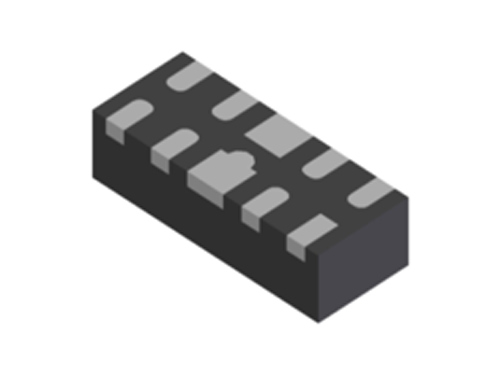
Although ESD diodes are protective devices, they have their own "limits" and can also fail in harsh application scenarios.
The scenarios most likely to cause ESD diode failure fall into three main categories. The first is a "high-frequency repetitive ESD discharge environment"—such as industrial touch screens, USB ports that require frequent plugging and unplugging, and metal housing buttons. In these scenarios, the ESD diode faces not a single large surge, but hundreds or even thousands of repeated moderate-level electrostatic discharges. The energy accumulates gradually, the PN junction degrades over time, and ultimately the protective device turns into a conductive short circuit. The second is a "high-temperature plus ESD superimposed environment," such as automotive center consoles, BMS, and devices with high-density PCB layouts. As the temperature increases, the ESD diode's withstand capability drops noticeably, and an electrostatic discharge of the same intensity is more likely to cause thermal damage under high temperatures. The third is a humid environment—moisture and contaminants form leakage paths on the PCB surface, causing the electrostatic discharge to no longer be uniformly distributed and making it easy to burn through the PN junction.
The key to proactive prevention lies in the following: during component selection, do not only look at the ESD rating but also consider the repetitive discharge capability and high-temperature tolerance; in harsh environments, implement "graded protection"—adding a ferrite bead or a small resistor at the front end to share the transient energy; at the same time, ensure the ESD return path is as short as possible in the PCB layout, and apply conformal coating to critical interfaces.
Jiangsu Daqi Semiconductor Technology Co., Ltd. © Copyright 2025
【Backstage】