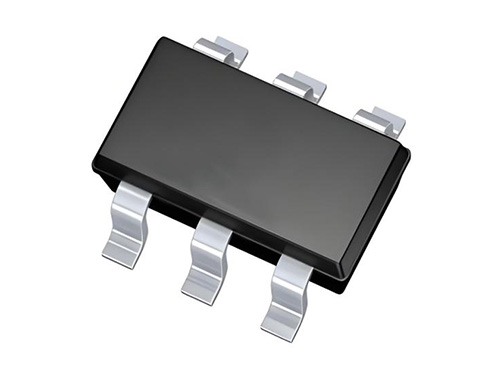
Selecting components merely based on ESD voltage rating is far from sufficient and may even lead to severe issues.
ESD voltage ratings (e.g. ±8 kV contact discharge, ±15 kV air‑gap discharge) follow the IEC 61000‑4‑2 test standard, representing the device’s withstand capability under standard ESD pulses. Nevertheless, this parameter cannot reflect clamping capability, current‑carrying capacity or signal compatibility. Multiple real‑world cases show that engineers adopted "ultra‑high‑rating" ESD diodes rated at ±30 kV, yet the devices got directly damaged by lightning surge at customer sites. Though featuring high ESD voltage rating, such components deliver excessively high clamping voltage and limited current‑handling capacity, incapable of passing IEC 61000‑4‑5 surge tests.
At least five key parameters shall be evaluated for proper component selection:
1. Reverse Working Voltage (VRWM) — Must exceed the maximum operating voltage of the protected circuit, with a recommended 20 % margin. Choose above 6 V for 5 V systems and above 4 V for 3.3 V systems.
2. Clamping Voltage (VC) — Lower value is preferred. It must be lower than the maximum withstand voltage of the protected IC.
3. Junction Capacitance (Cj) — Low‑capacitance variants are mandatory for high‑speed signal interfaces. HDMI 2.1 requires capacitance below 0.3 pF; USB 3.0 requires below 0.5 pF.
4. Peak Pulse Current (IPP) — Selected according to required protection level. IPP ≥ 20 A is generally required for IEC 61000‑4‑2 Level 4 (±8 kV).
5. Polarity selection — Unidirectional ESD diodes are acceptable for unipolar signals (e.g. 0‑5 V digital signals); bidirectional ESD diodes are compulsory for bipolar signals (e.g. audio signals, differential signals).
The essence of component selection lies in “matching”. Every parameter of the protective device shall precisely match circuit requirements, instead of simply picking the component with the highest voltage rating.
Jiangsu Daqi Semiconductor Technology Co., Ltd. © Copyright 2025
【Backstage】