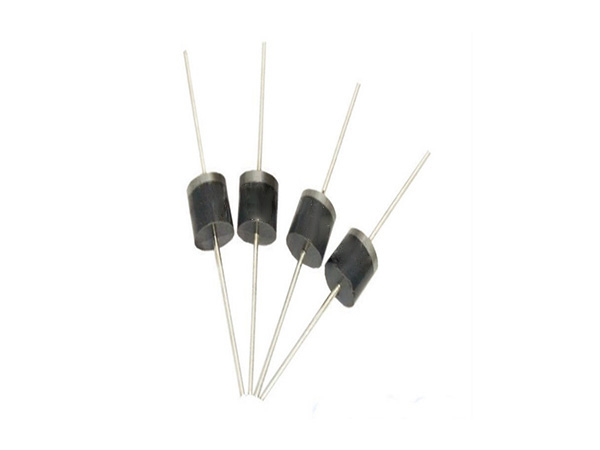
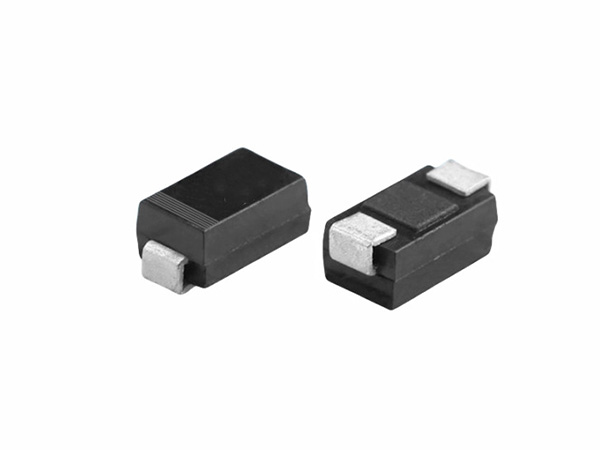
In the past decade, innovative technologies have continuously developed and improved, and the corresponding safety and reliability standards for automotive electronic devices have also undergone earth shaking changes. Technologies such as vehicle stability control system and anti lock braking system used to appear as optional configurations, but now they have become standard configurations for the vast majority of vehicles.
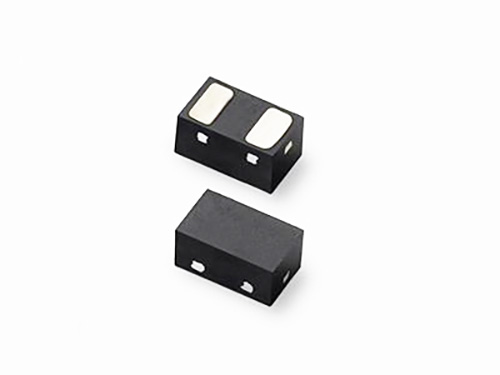
The working principle of ESD (electrostatic discharge) protector is mainly based on its ability to quickly change from a high resistance state to a low resistance state when an abnormal overvoltage occurs in the circuit, thereby discharging the instantaneous overcurrent caused by the abnormal overvoltage to ground and clamping the abnormal overvoltage within a safe level to protect the subsequent circuit from damage. The following is a detailed explanation of its working principle:
The higher the operating frequency of an ESD protector, the greater its impact on the signal. In fact, the impact of ESD protectors on signals depends on multiple factors, including their parasitic capacitance (Cj), operating voltage, breakdown voltage, clamp voltage, and peak pulse current. Firstly, parasitic capacitance (Cj) is one of the key factors affecting the signal impact of ESD protectors. The smaller the parasitic capacitance, the less impact it has on high-speed signals.
The operating frequency of ESD (electrostatic discharge) protectors is not a fixed value, but is determined based on their specific application scenarios and device characteristics. The following is a detailed explanation of the operating frequency of ESD protectors: 1. The diversity of operating frequencies determines the operating frequency: ESD protectors are widely used in various electronic devices, such as computers, communication equipment
A diode is a common electronic component that plays an important role in electronic circuits. Temperature is an important factor that may affect the performance of diodes. Next, Haojinlong editor will discuss with you how temperature affects the performance of diodes. Firstly, temperature has an impact on the conduction characteristics of diodes. Generally speaking, when a diode operates normally at its rated temperature, it should have low on resistance and high on current.
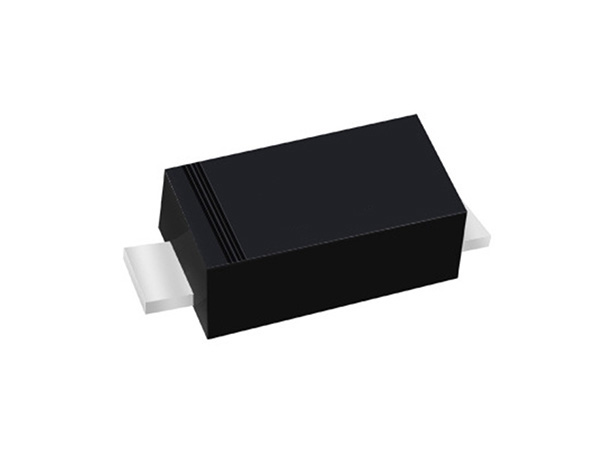
Transient suppression diode, also known as TVS diode or transient suppression diode, is a widely used new type of high-efficiency circuit protection device. It has extremely fast response time (sub nanosecond level) and considerable surge absorption capability. When its two ends are subjected to a momentary high-energy impact, the TVS tube can quickly change the impedance value between the two ends from high impedance to low impedance, in order to absorb a momentary high current